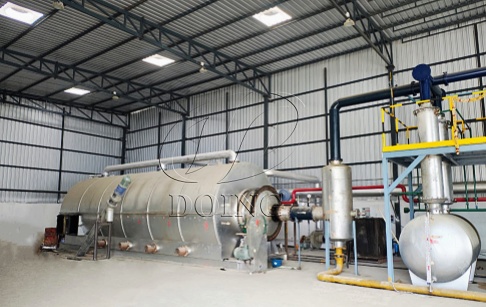


What auxiliary equipment is needed for a complete tire pyrolysis line?
A tire pyrolysis line has one core piece — the reactor. But the reactor cannot work alone. Getting waste tires in, managing what comes out, keeping the process safe, and staying within environmental limits all require supporting equipment across multiple stages.
Buyers who only compare reactor prices often find that two identical-looking reactors come with completely different auxiliary scopes. One quote might include everything the line needs to run; another might list only the reactor and a condenser, leaving the rest for the buyer to source later — at much higher retrofit cost.
DOING ECO (Henan DOING Environmental Protection Technology Co., Ltd) manufactures tire pyrolysis lines from skid-mounted to fully continuous configurations and scopes the auxiliary equipment as one integrated package. The sections below walk through each process stage, the smaller parts that decide how well it performs, and what a complete scope should contain.
Tire Pyrolysis Line Auxiliary Equipment Overview
| Stage | What it does | Core equipment |
| 1. Tire receiving and preparation | Receives, shreds and separates raw tires | Tire cutter/debeader, Steel-wire puller, Shredder/crusher, Magnetic separator |
| 2. Feeding and sealing | Introduces material without letting oxygen inside | Conveyor, Buffer hopper, Screw or ram feeder, Rotary airlock, Double-lock hopper, Nitrogen-purge connection |
| 3. Reactor heating | Provides controlled heat for pyrolysis | Burner system, Fuel-gas piping, Combustion-air fan, Refractory lining, Reactor drive, Temperature and pressure instruments |
| 4. Oil vapor condensation | Cools vapor into liquid and separates water | Hot-gas ducting, Cyclone or hot filter, Vapor buffer tank, Staged condensers, Heat exchangers, Oil–water separator, Oil tanks, Transfer pumps |
| 5. Syngas handling | Cleans and routes combustible non-condensable gas | Knock-out drum, Gas scrubber, H₂S/acid-gas treatment, Blower/compressor, Combustion chamber, Recycled-fuel-gas line |
| 6. Emissions treatment | Cleans fumes to meet permit limits | Cyclone, Pulse-jet dust collector, Scrubber, Demister, Desulfurization tower, SCR denitration, Activated-carbon adsorption, Stack |
| 7. Carbon black recovery | Removes, cools and collects solid char | Sealed discharge screw, Char cooler, Bag filter, Magnetic separator, Storage silo, Bagging or pelletizing station |
| 8. Steel wire recovery | Collects and processes bead and body wire | Magnetic separator, Steel-wire puller, Wire baler/compactor |
Tire Pyrolysis Line Core Process Stage Auxiliary Equipment
Stage 1 — Tire Receiving and Preparation
Raw tires arrive whole or in bales and must be processed before entering the reactor. A tire debeader pulls bead wire from each rim — this protects the downstream shredder from metal damage and produces a saleable scrap product. A shredder then reduces whole tires to chips or powder; the correct output size depends on the pyrolysis line type, since semi-continuous and fully continuous tire pyrolysis lines require shredded or granular feed for their enclosed screw feeders, whereas batch tire pyrolysis lines may accept whole or cut tires. A magnetic separator removes residual bead and body steel to prevent iron contamination in the final carbon black. A conveyor connects each step so material moves continuously from receiving to the feeder inlet.
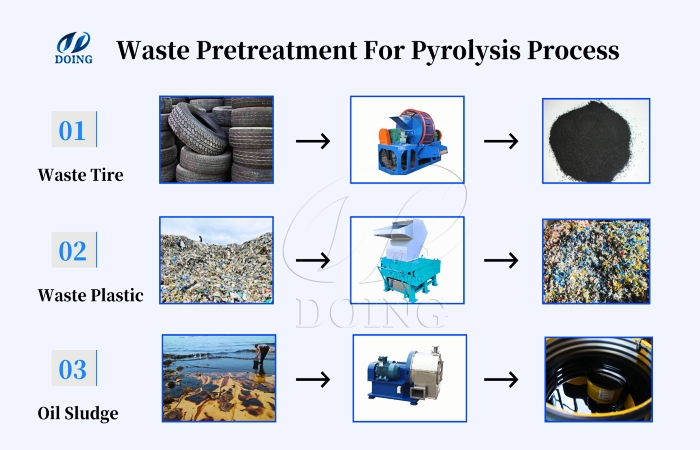
Waste treatment for pyrolysis process
Stage 2 — Feeding and Sealing
The pyrolysis reaction requires no oxygen — any air ingress causes combustion instead, lowering oil yield and creating a safety hazard. A buffer hopper holds a measured charge of prepared material above the feeder. A screw feeder or ram feeder pushes material into the reactor through a sealed port. The rotary airlock is the critical sealing component: close-clearance rotating blades let material through while blocking gas backflow. And a nitrogen-purge connection floods the feeder area with inert gas as a further oxygen barrier at startup, pressure anomalies and before any maintenance opening.
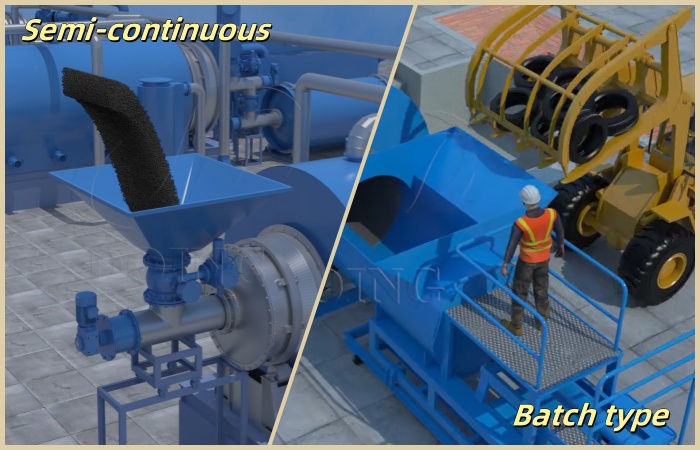
Difference between DOING ECO semi-continuous and batch tire pyrolysis line feeding stage
Stage 3 — Reactor Heating and Support
A controlled heat source is needed to raise the reactor to pyrolysis temperature and maintain it through the cycle. A burner fires on the customer’s primary fuel — diesel, natural gas, LPG or coal — and many commercial lines also run on their own syngas as supplementary fuel. Combustion-air fan and fuel-gas piping distribute the heat evenly. Temperature and pressure instruments let the operator monitor conditions in real time. Safety valves and rupture discs provide overpressure protection, and refractory lining insulates the reactor shell from the high internal temperature.
Stage 4 — Oil Vapor Condensation
When the reactor reaches operating temperature, tires release a hot vapor mixture of oil, water and non-condensable gas. Hot-gas ducting and a cyclone or hot filter remove solid carryover before the vapor enters the condensation train. Most commercial lines use multiple staged condensers — each stage cooler than the last — to capture progressively lighter oil fractions. A vapor buffer tank smooths out fluctuations in the gas flow. Heat exchangers maximize cooling efficiency. An oil–water separator removes water before the clean product goes to storage tanks, and transfer pumps move finished oil to the storage tank.
DOING ECO tire pyrolysis line oil vapor condensation stage video
Stage 5 — Syngas Handling
Not all vapor condenses into liquid. The remaining combustible gas — mainly hydrogen, methane, carbon monoxide and hydrogen sulfide (H₂S) — must be cleaned before it can be burned as fuel. A knock-out drum catches liquid carryover before the gas reaches the scrubber. The gas scrubber uses an alkaline solution to remove H₂S and acidic compounds; without this step, the burner nozzles, heat-exchange surfaces and stack suffer rapid corrosion every time the syngas is burned. A blower or compressor maintains gas flow, a flame arrestor prevents flashback, and a gas analyzer confirms composition before the cleaned syngas is routed back to the burner through the recycled-fuel-gas line.
Stage 6 — Emissions Treatment
Burner fumes and process vents must be cleaned before leaving the chimney to meet local environmental permit limits. Most permits regulate four pollutants: SO₂, NOx, particulates and VOCs — each requires a specific control step, and a quotation that lists “emissions treatment” as a single line item is not a complete scope. A cyclone removes large particles first; a pulse-jet dust collector catches finer dust; a scrubber and demister handle acid gases and droplets; a desulfurization tower removes sulfur dioxide; SCR denitration controls NOx; and activated-carbon adsorption captures odours and VOCs. A stack with properly positioned sampling ports releases cleaned gas at the correct height.
DOING ECO tire pyrolysis line emission treatment introduction video
Stage 7 — Carbon Black Recovery
After the oil has been driven off, a solid carbon black powder remains in the reactor and must be removed safely. A sealed discharge screw extracts the hot char without letting air in — air contact with hot char causes ignition. A char cooler brings the temperature to a safe handling level. A bag filter captures fine char dust, and a magnetic separator at the discharge catches any remaining steel wire so it does not contaminate the final product. The finished char is collected in a storage silo or directed to a bagging or pelletizing station for packaging.
DOING ECO tire pyrolysis line carbon black discharging devices introduction video
Stage 8 — Steel Wire Recovery
The bead wire removed at the debeader stage is a saleable scrap product. A magnetic separator at the feed conveyor pulls out bead wire after debeading, and a steel-wire puller handles any remaining body wire. A second magnetic separator at the char discharge catches wire that entered the reactor with the feed. A wire baler or compactor compresses loose wire into dense, manageable bundles for transport and sale.
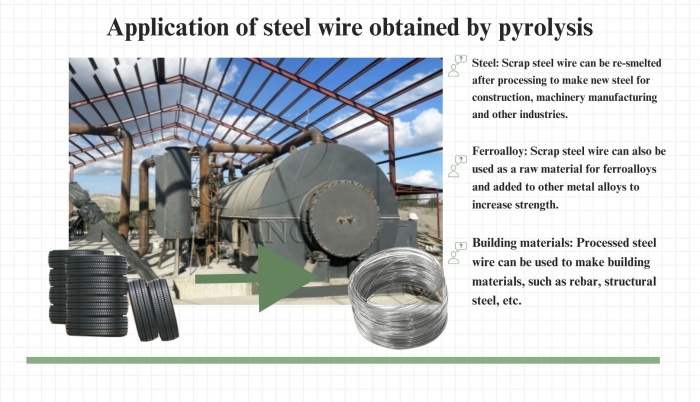
DOING ECO tire pyrolysis line steel wire recovery
Tire Pyrolysis Line Essential Infrastructure and Utility Package
The eight stages above need a set of base services to run. These are almost always the buyer’s responsibility, and the most common cause of commissioning delays.
Utility What it covers Key buyer action
| Utility | What it covers |
| Electrical supply | Motor control centre, variable-frequency drives, standby generator for safety-critical loads |
| Startup fuel | Diesel, LPG or natural gas — needed before the line produces its own syngas |
| Cooling water | Circulating system with cooling tower or dry cooler, pumps and water treatment |
| Fire protection and civil works | Hydrants, extinguishers, foundations, bunded tank areas and control room |
Optional Additions That Affect Your Revenue
These items are not required to run a tire pyrolysis line, but they affect how much the outputs are worth.
Carbon black processing: Raw char can be sold as-is or processed into rCB — ground, classified, dried and pelletized — for higher-specification markets. If carbon black is part of your revenue model, include the processing line in the initial scope. Retrofitting it later means rebuilding the char collection system and re-routing conveyors.
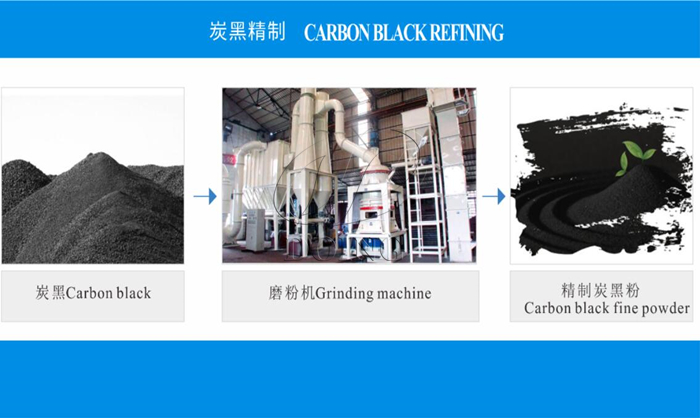
Pyrolysis carbon black refining production line
Steel wire cleaning: Wire that has been through the tire pyrolysis process often has char residue. A simple cleaning stage removes this residue and improves the sale price of the scrap steel.
Negative pressure system: Some pyrolysis lines run at slight positive pressure. Others run at slight negative pressure, using a Roots blower, gas holder and vacuum pump to actively draw vapor out of the reactor throughout the cycle. The negative pressure design does three things a positive-pressure design does not:
Safety: When the pyrolysis cycle ends and the reactor stops producing new vapor, the negative pressure continues to draw residual hot vapor out of the reactor so it does not stagnate in the hot zone.
Product quality: Vapor that leaves the reactor faster spends less time in contact with the char, producing carbon black with lower ash content and better transparency.
Operating cost: A stable negative pressure system can allow a slightly lower pyrolysis temperature for the same conversion rate, reducing fuel consumption.
The vacuum system is interlocked with the gas-handling and cooling systems — if vacuum is lost, the line initiates a safe shutdown.
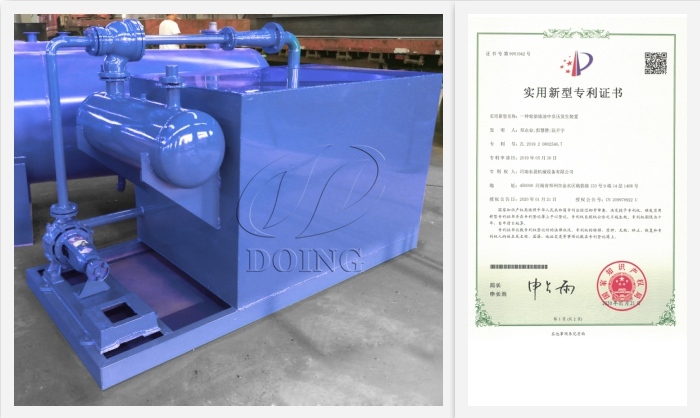
DOING ECO pyrolysis line vacuum device
The DOING ECO Company Commitment: Why Complete Scope Matters
The DOING ECO Company approach: DOING Company provides complete, integrated tire pyrolysis solutions. Our scope covers every stage described in this article, with each component named and specified in the scope-of-supply document — not bundled into vague line items.
What we provide:
Detailed process flow diagram (PFD) and equipment layout drawings
Accurate utility consumption list (water, electricity, fuel) for each stage
Mass and energy balance sheets based on your specific feedstock
Complete emissions control design matched to your local permit requirements
Product quality specifications and performance guarantees
On-site equipment installation, commissioning and operator training
After-sales technical support and spare parts supply
Customized for your project: Our solutions are sized and configured based on your feedstock form, your preferred pyrolysis technology, your product target, your local environmental permit limits, and your available utilities.
FAQ
Can whole tires go directly into the reactor, or do they need to be shredded first?
It depends on the reactor type. A batch tire pyrolysis line may accept whole or pre-cut tires. A semi-continuous tire pyrolysis line needs shredded feed for its enclosed screw feeder. A fully continuous tire pyrolysis line needs fine rubber powder from a full pre-processing line. Check the required feed size before selecting a reactor — a mismatch between feed size and reactor type is one of the most common causes of poor performance on a new installation. Recommended reading: When Is Tire Shredding Required Before The Pyrolysis Process?
What happens if the emissions equipment is undersized?
It passes a visual inspection and fails a real stack test. A quotation that lists “emissions treatment” without specifying the control method for each pollutant will look complete but underperform. Redesigning and rebuilding emissions equipment under an active permit is expensive. Before signing, ask for the design gas flow rate, the media specification and the maintenance schedule for each emissions item.
What utilities need to be ready before the equipment arrives?
All of them, ideally. Foundations, electrical supply, cooling water, compressed air, fire protection and bunded tank areas should be complete or well advanced before the line ships. Buyers who prepare their utilities during the equipment lead time start production sooner and avoid the most common commissioning delays.
Is the negative pressure system worth the extra cost?
Negative pressure costs more upfront. Whether it is worth it depends on your feedstock, your product target and your operating schedule. It has three concrete advantages: it reduces the flash-explosion risk from residual vapor at end-of-cycle; it produces carbon black with lower ash content and better transparency; and it can reduce fuel consumption. Ask the supplier to quantify each advantage for your specific conditions.
Should I include a carbon black processing line from the start?
If you plan to sell carbon black — rather than use it on-site — include the processing line in the initial scope. Adding grinding, classification and pelletizing after the line is commissioned means rebuilding the char collection system and re-routing conveyors. It is far easier to plan it from the beginning.
Send DOING ECO four things — your feedstock form and daily volume, your product target, your local emission limits, and your site utility status — and DOING ECO will reply with a process-flow diagram and a proposal that shows exactly what is included and what the buyer prepares on site.


Please feel free to leave your contacts here and your privacy is protected. A competitive quotation will be provided according to your detailed requirement within one business day.
- QWhat raw material do you plan to process?
- Rubber tire
- Waste plastic
- Oil sludge
- Biomass
- Waste oil
- Pyrolysis oil
- Not decided yet
- Other:
- QMachine daily processing capacity (tons of feedstock)
- 100kg-2ton
- 5-15ton
- 15-50ton
- >50ton
- Not decided yet
- QDesired final product and its primary applications

-
Waste Oil Recycling to Diesel Machine Price, Capacity, and ROI: A Complete Guidance for Customer
-
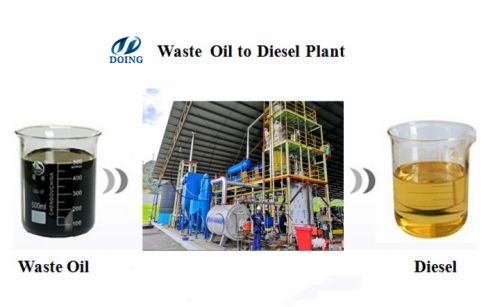
What is the Process of Waste Oil Distillation Plant and Its Advantages?
-
Horizontal vs Vertical Reactor for Waste Oil Distillation Plant
-
How much waste oil can be processed by waste oil recycling distillation plant daily?
-
Two Options for Liquid and Solid Catalyst Waste Oil Recycling Machines
-
-
-

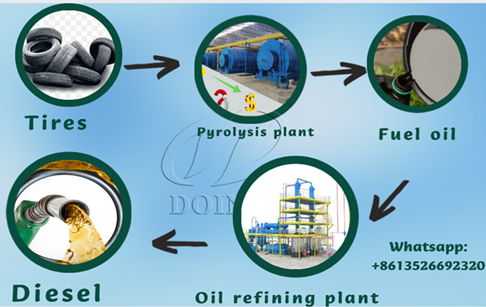
DOING 10TPD Solid Catalyst Waste Oil Distillation Plant Installed in Kenya
-
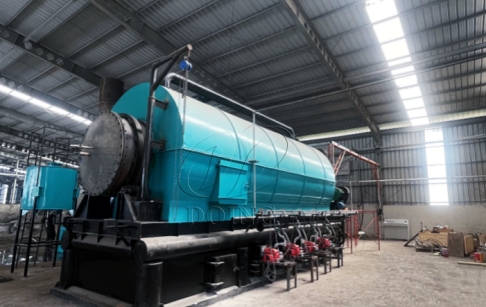
10Ton Batch Plastic Pyrolysis Equipment Installed in Indonesia
-
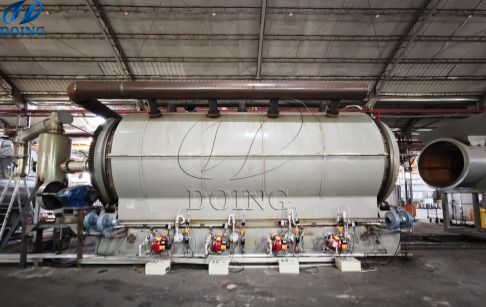
2 Sets of DOING Pyrolysis Equipment for Plastic and Biomass Recycling Installed in China
-
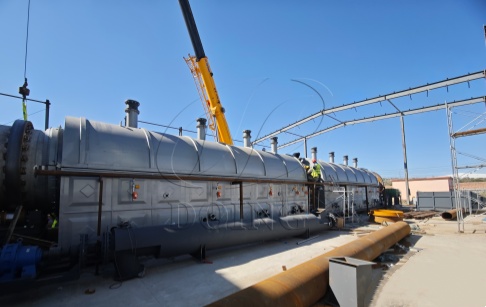
Successful Installation of 50-Ton Fully Continuous Oil Sludge Pyrolysis Equipment in China
-
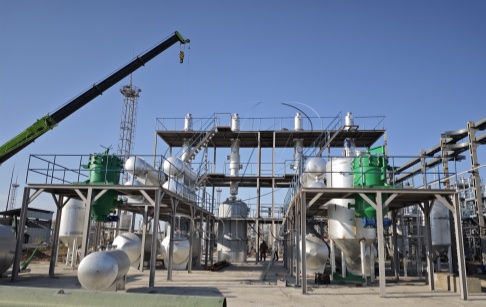
Installation of DOING 30 tons of waste oil distillation machine project installed in Kazakhstan
-
-