


Waste Oil Recycling to Diesel Machine Price, Capacity, and ROI: A Complete Guidance for Customer
The demand for sustainable fuel sources and efficient waste management has made waste oil recycling an increasingly attractive venture. This guide offers a comprehensive overview of DOING ECO's waste oil recycling to diesel machines, covering capacities, technology options, pricing, output products, and expected return on investment (ROI).
Equipment Overview:
DOING ECO provides reliable waste oil recycling to diesel machine designed to transform various oil wastes, including used engine oil, waste lubricant oil, pyrolysis oil, crude oil, and liquid sludge, into valuable diesel fuel and asphalt residue.
Available Capacities:
Understanding that every investor has unique requirements, DOING ECO offers a flexible range of daily processing capacities for our waste oil recycling to diesel machine:
100kg – 1 Ton/Day: Ideal for pilot projects, on-site testing, or very small-scale operations.
3-5 Tons/Day: An entry-level option for commercial recycling operations. Suitable for small-scale refineries or growing enterprises.
7 Tons/Day: A balanced capacity for medium-sized operations.
10-14 Tons/Day: Designed for medium-to-large scale production requirements. High-capacity solutions for industrial-scale processing.
For new investors, we generally recommend starting with smaller units, typically in the 1 to 5 tons/day range. This allows you to validate your local market, gain operational experience, and build a stable supply chain and customer base before scaling up to larger capacities.
3. Two Catalyst Technologies:
DOING ECO offers two primary catalyst technological solutions for waste oil refining, each with distinct advantages suited to different operational priorities and feedstock characteristics.
Traditional Acid-Base Scrubbing Refining System
This method involves heating the waste oil to produce oil vapor, which is then cooled and condensed into light oil. This light oil then undergoes an acid-base Scrubbing process to effectively remove impurities such as gums, asphaltenes, and pigments. Subsequent decolorization and filtration steps yield the final product.
Lower initial investment cost: Compared to solid catalyst refining systems, this system has a lower initial purchase cost, making it suitable for startups with limited budgets.
Relatively simple operation: The process flow of this acid-base scrubbing catalytic refining system is intuitive, and operators can easily master it after training.
Mature and reliable technology: The acid-base washing refining process is a traditional method that has been proven over a long period in the oil processing field. It is a mature technology with stable operation.
Solid Catalyst Refining System
Our solid catalyst refining system has enhanced efficiency and environmental performance. In this process, waste oil is heated and distilled into oil vapor, which then directly enters a catalytic tower. Here, specially formulated solid catalysts facilitate the purification process. The catalytically treated oil vapor is subsequently fractionated, condensed, and decolorized to produce the final diesel and other products.
Faster Processing: Catalysts accelerate the reaction, leading to shorter batch processing times.
Lower Energy Consumption: Requires less heat input, which translates to reduced fuel costs.
Reduced Waste: Generates fewer residues and waste materials, improving environmental compliance.
Investment: While the initial investment is higher than the traditional method, the long-term operational savings and superior product quality often provide a better overall return.
4. Pricing
The price of DOING ECO's waste oil recycling to diesel refining machine is influenced by three key factors: the daily processing capacity, the chosen technological solution (traditional acid-base vs. solid catalyst system), and the degree of automation (manual vs. fully automatic PLC control).
Approximate Reference Prices:
Small-scale (100kg–5 tons/day): Typically ranges from 18,000 to 45,000 USD.
Medium-scale (7–10 tons/day): Generally falls between 55,000 and 93,000 USD.
Large-scale (14 tons/day and above): Starts over $100,000 USD.
Important Note: These figures are approximate reference prices. The final price will vary based on specific client requirements, including customization options, auxiliary equipment needs, and the degree of automation chosen. We encourage customers to contact DOING ECO directly for a tailored quotation based on their precise project specifications.
5. Output Products:
Our waste oil to diesel distillation machines produce two primary output products:
Non-Standard Diesel (Main Product)
This is the primary product of the refining process. It is important to note that this diesel is typically considered "non-standard" or "industrial diesel" and is generally not suitable for on-road vehicles due to variations in specifications (e.g., cetane number, sulfur content) compared to refinery-produced automotive diesel.
Typical Uses:
Industrial Burners: Fuel for industrial furnaces, boilers, kilns, and dryers.
Stationary Generators: Powering generators for electricity production in industrial settings or remote locations.
Heavy Machinery: Fueling construction equipment, agricultural machinery, and mining vehicles (off-road applications).
The diesel fraction typically accounts for 80% to 90% of the total output, depending significantly on the quality and type of the input waste oil.
Asphalt Residue (By-product)
After the valuable diesel fractions are extracted, a heavier, non-volatile residue remains at the bottom of the distillation reactor. This is asphalt residue.
Typical Uses:
Road Paving: Can be incorporated into asphalt mixtures for road construction and repair.
Waterproofing Materials: Used in the production of roofing felt and other waterproofing products.
Binder in Construction: Employed as a binding agent in various construction applications.
6. Return on Investment (ROI):
Calculating the exact ROI requires a detailed financial model specific to your local conditions. However, we can outline the key factors to consider for a realistic projection.
Costs to Consider:
Equipment Acquisition Price: The cost of the waste oil recycling to diesel machine itself.
Transportation, Customs, and Installation: Expenses related to shipping the equipments, import duties, and professional installation.
Daily Operating Costs:
Heating Fuel/Electricity: Energy required for the refining process.
Catalysts (for catalyst system): Recurring cost of catalyst materials.
Labor: Wages for operators and maintenance staff.
Maintenance: Regular upkeep and potential spare parts.
Feedstock Acquisition: The cost of purchasing or collecting waste oil.
Revenue Streams:
Sale of non-standard diesel and asphalt residue: Revenue generated from selling the primary product. The selling price will depend on local industrial fuel market rates.
Typical Payback Period Range:
Based on industry averages and DOING ECO's client experiences:
For small to medium-sized units (1-7 tons/day), a typical investment payback period ranges from 10 to 18 months. This timeframe is highly dependent on factors such as the cost of feedstock, the local selling price of industrial diesel, and the efficiency of your operational management.
Larger units (10-14 tons/day and above) require a higher initial capital outlay, which may lead to a slightly longer payback period. However, they also offer significantly higher absolute returns due to greater processing volumes.
It is not possible for us to provide exact ROI figures without specific data from your proposed operational location. We strongly advise potential customers to conduct a thorough financial analysis based on their specific feedstock costs, local diesel selling prices, utility rates, and labor costs to project a realistic ROI.
7. Practical Advice for New Investors
Starting a waste oil recycling to diesel business requires careful planning. Here are some practical tips:
Start Small: Begin with a smaller capacity unit (e.g., 1–5 tons/day) to thoroughly test the local market, validate your business model, and gain essential operational experience. This approach minimizes initial risk.
Choose the Right Technology: Choosing the right catalytic refining technology hinges on a comprehensive assessment of your raw material characteristics, budget, and requirements for product quality and environmental standards. If your waste oil is relatively clean and your budget is limited, a traditional acid-base scrubbing refining system is sufficient. However, if your waste oil is complex, you are pursuing high oil yields, and you need to meet higher environmental standards, a solid catalyst refining system will be a more efficient, environmentally friendly, and long-term profitable option.
Scale Up Gradually: Once you have established a stable and reliable supply of waste oil feedstock and a solid customer base for your output products, you can confidently consider expanding your operations with larger capacity machine.
Focus on Local Economics: Understand your local market dynamics for both waste oil acquisition and refined fuel sales. These factors will be the most significant determinants of your project's profitability.
DOING ECO is committed to supporting your waste oil recycling to diesel venture. Contact us today for a personalized consultation and a custom quote to begin your waste oil recycling to diesel business.


Please feel free to leave your contacts here and your privacy is protected. A competitive quotation will be provided according to your detailed requirement within one business day.
- QWhat raw material do you plan to process?
- Rubber tire
- Waste plastic
- Oil sludge
- Biomass
- Waste oil
- Pyrolysis oil
- Not decided yet
- Other:
- QMachine daily processing capacity (tons of feedstock)
- 100kg-2ton
- 5-15ton
- 15-50ton
- >50ton
- Not decided yet
- QDesired final product and its primary applications

-

DOING ECO 10TPD Solid Catalyst Waste Oil Distillation Plant Installed in Kenya
-
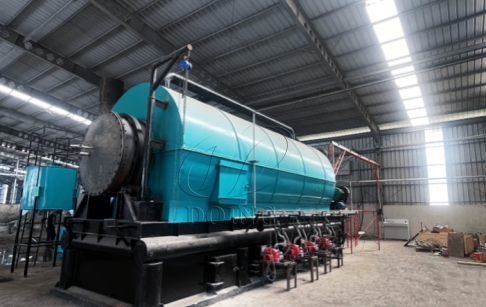
10Ton Batch Plastic Pyrolysis Equipment Installed in Indonesia
-
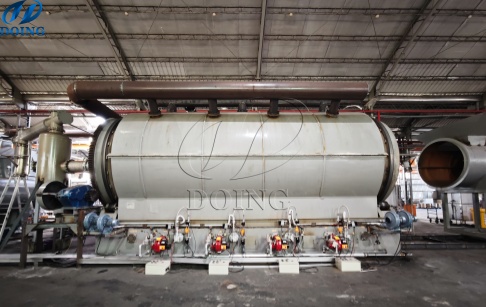
2 Sets of DOING ECO Pyrolysis Equipment for Plastic and Biomass Recycling Installed in China
-
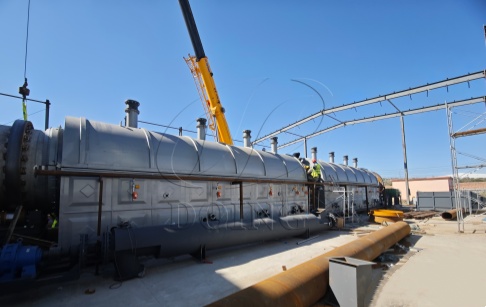
Successful Installation of 50-Ton Fully Continuous Oil Sludge Pyrolysis Equipment in China
-
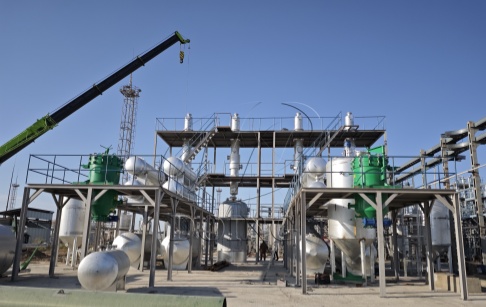
Installation of DOING ECO 30 tons of waste oil distillation machine project installed in Kazakhstan
-
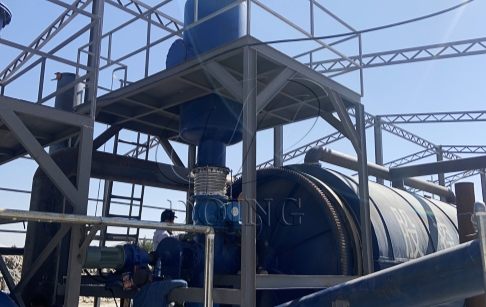
DOING ECO 15TPD plastic pyrolysis machine installed in Jordan
-
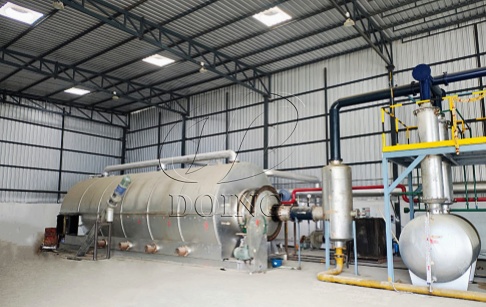
A set of DOING ECO plastic to fuel pyrolysis machine in India