


Is waste engine/motor oil worth money?
Waste engine/motor oil refers to used, degraded lubricating oil, including automotive engine oil, gear oil, hydraulic oil, and grease. It contains large amounts of harmful substances such as heavy metals, polycyclic aromatic hydrocarbons, and combustion products. Some people consider waste engine oil to be useless, but in fact it has a lot of recycling value.
The treatment and recycling of waste engine/motor oil generally includes the following methods:
1)Waste oil collection companies collect waste engine oil from many small sources (such as auto repair shops or individuals) and then sell it in bulk to refineries or end users. They typically provide collection bins and regular door-to-door collection services. Waste oil dumping may require users to pay a processing fee.
2) Industrial fuel blenders process and blend waste oil to meet industrial burner specifications and sell it as a cheaper alternative to virgin fuel oil. By selling the waste oil, you may get around $80-$300.
3) Re-refined into diesel fuel by waste oil distillation equipment, which is a high-value product for burners in cement kilns, power plants, and factories. This is the most valuable method for recycling waste engine/motor oil.
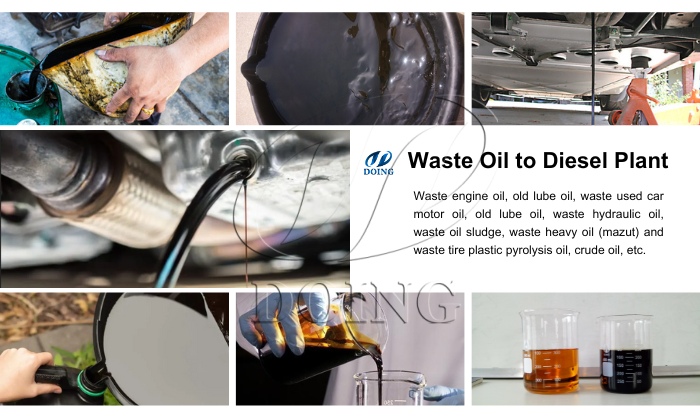
Waste engine/motor oil distillation technology
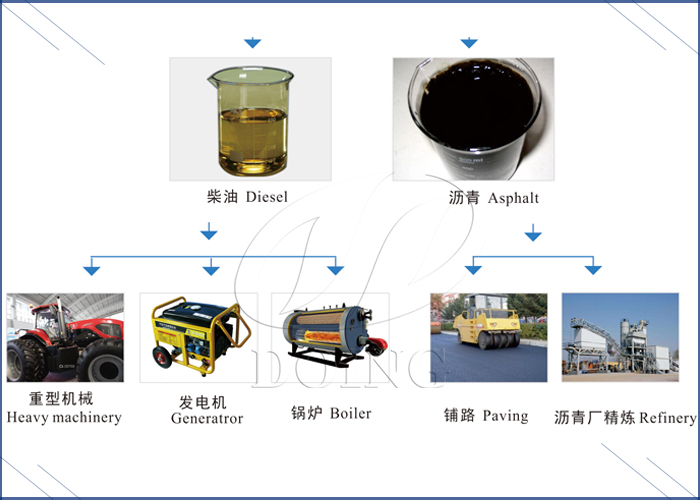
Applications of Waste Engine/Motor Oil Distillation products
Non-standard Diesel: Primarily composed of light hydrocarbons with a high calorific value, $500-800/ton, it can serve as a low-cost alternative fuel and is widely used in:
Industrial Burners: Such as boilers and kilns, as an economical and efficient fuel substitute, reducing operating costs.
Diesel Generator Sets: Used as backup energy.
Construction Machinery: Such as excavators, cranes, mining equipment, and marine auxiliary machinery.
Asphalt: A heavy residue with high viscosity and high temperature resistance, commonly used as an additive in asphalt mixtures for road paving, waterproof coatings, roofing materials, or industrial sealants. It can also be processed into carbon black raw materials for rubber products or pigment production.
Next, we will discuss the waste engine/motor oil distillation and diesel fuel recovery method using DOING waste engine/motor oil distillation equipment.
Applications of Waste Engine/Motor Oil Distillation products
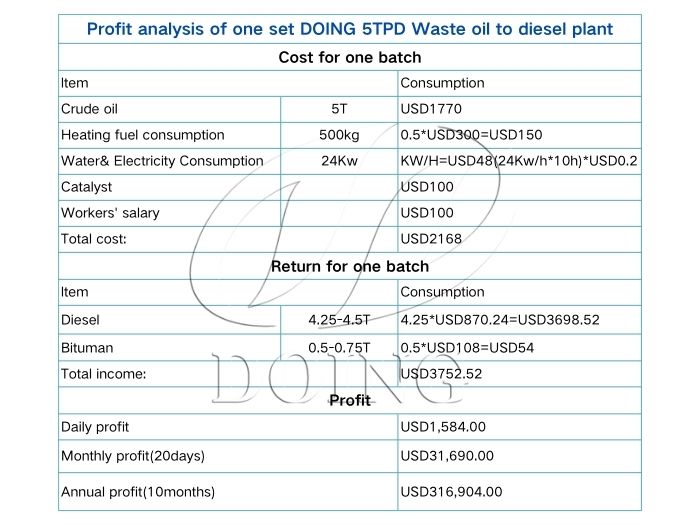
Profit analysis of DOING waste engine/motor oil distillation equipment
DOING Waste Engine/Motor Oil Distillation Equipment Process
DOING's waste engine/motor oil distillation equipment is designed to convert waste engine/motor oil containing various impurities (such as water, metal particles, soot, gum, etc.) into reusable diesel fuel through a series of physical and chemical treatment steps. Its core process typically includes the following key stages:
Pre-treatment Stage: Preheating removes water, larger particles, and solid impurities from the waste engine/motor oil, a prerequisite for subsequent catalytic reactions.
Distillation Stage: Under high temperature (typically between 300°C and 400°C) and air-free conditions, heavy hydrocarbon molecules in the waste engine/motor oil are broken down into lighter hydrocarbons. This step is crucial for initially removing most impurities and separating the target product.
Catalytic Treatment Stage: This is the core stage in the entire refining process that determines the quality and value of the final product. Through the action of a catalyst, undesirable components in the oil are further removed, improving the oil's color, odor, stability, and overall quality. DOING offers two advanced technology options at this stage:
A. Acid-Base Liquid Catalysis: Utilizes strong acids and bases as catalysts to chemically react with impurities in waste engine oil.
Acid Catalysis: Primarily used to remove polar impurities from oils, such as gums, resins, asphaltenes, and some metallic soaps. Acidic catalysts cause these impurities to polymerize, precipitate, or decompose, facilitating subsequent removal.
Base Catalysis: Primarily used to neutralize residual acidic substances in oils or remove certain sulfur- and nitrogen-containing compounds.
Process: Typically, the pre-distilled oil is mixed with a liquid catalyst for a thorough reaction, followed by separation of the catalyst and reaction-generated impurities through sedimentation, filtration, or washing.
B.Solid Catalyst Catalysis: Employs a specific solid catalyst in a stationary reactor, allowing the target distillate to pass through and selectively adsorb, degrade, or transform impurities in the oil.
Catalyst Characteristics: DOING's solid catalysts typically possess a large specific surface area, excellent adsorption capacity, and catalytic activity. They can specifically remove polar compounds, sulfides, nitrides, and unsaturated compounds from oil products, while also improving the color and odor of the oil.
Process: Distilled oil gas is fed into a reactor containing a solid catalyst. The oil gas and catalyst come into full contact within the reactor, achieving catalytic refining and then liquefy into oil. After the reaction, the catalyst can be reused, requiring only periodic replacement.
Post-Refining and Finished Product Collection: The primary diesel fuel obtained from condensation may have a slight color or odor. It then enters the refining and decolorization system. This system uses specially formulated adsorbents such as bleaching clay or activated carbon to perform final filtration and adsorption on the oil, thoroughly removing residual trace pigments and odors, ultimately yielding clear and transparent diesel fuel that meets requirements.
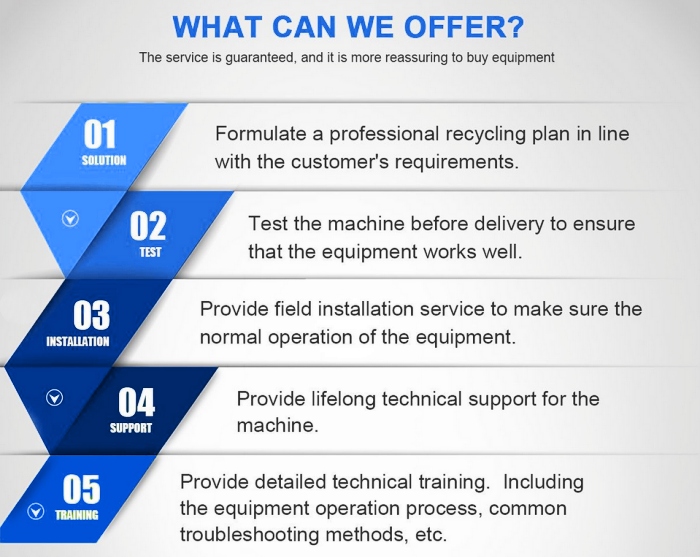
DOING waste engine/motor oil distillation equipment manufacturer
Waste engine/motor oil has clear commercial potential through distillation and refining. The key lies in the comprehensive balance of raw material stability, buyer market, economies of scale, and compliance costs. DOING's waste oil distillation solutions are dedicated to helping customers quickly implement solutions and achieve substantial returns on investment with lower entry barriers, higher energy efficiency, and more comprehensive compliance templates. If you are considering entering the waste oil recycling field, please contact DOING, we will provide customized solution design and comprehensive services.


Please feel free to leave your contacts here and your privacy is protected. A competitive quotation will be provided according to your detailed requirement within one business day.
- QWhat raw material do you plan to process?
- Rubber tire
- Waste plastic
- Oil sludge
- Biomass
- Waste oil
- Pyrolysis oil
- Not decided yet
- Other:
- QMachine daily processing capacity (tons of feedstock)
- 100kg-2ton
- 5-15ton
- 15-50ton
- >50ton
- Not decided yet
- QDesired final product and its primary applications

-
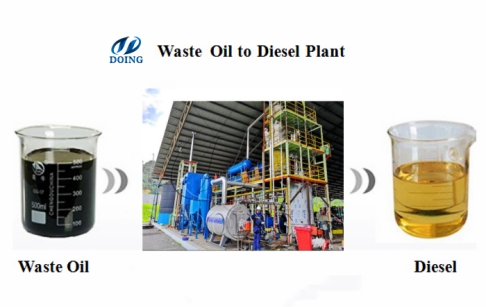
What is the Process of Waste Oil Distillation Plant and Its Advantages?
-
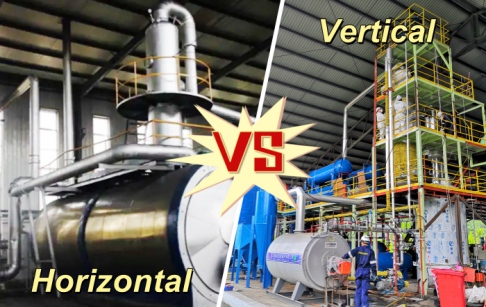
Horizontal vs Vertical Reactor for Waste Oil Distillation Plant
-
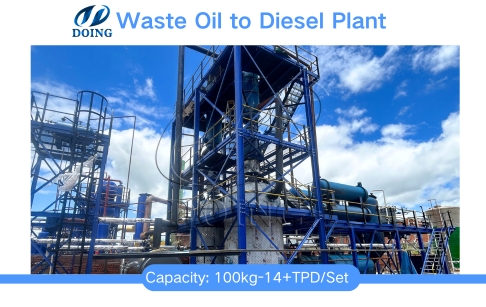
How much waste oil can be processed by waste oil recycling distillation plant daily?
-
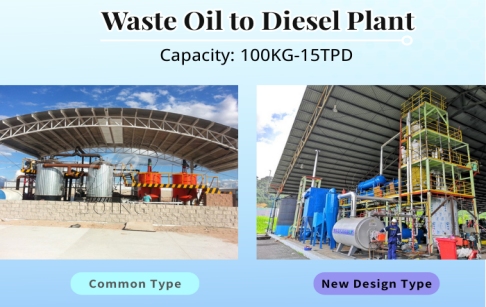
Two Options for Liquid and Solid Catalyst Waste Oil Recycling Machines
-
-
-
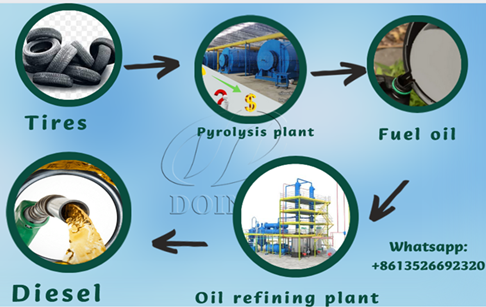
How many ways are there to regenerate waste engine oil to diesel?
-
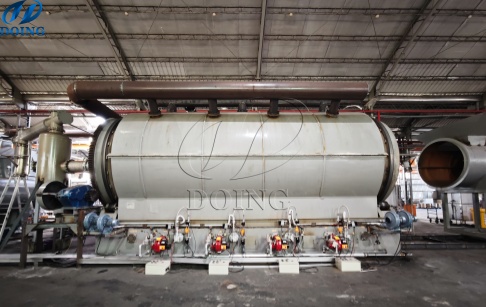
2 Sets of DOING Pyrolysis Equipment for Plastic and Biomass Recycling Installed in China
-
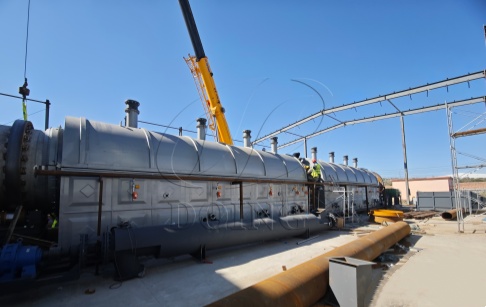
Successful Installation of 50-Ton Fully Continuous Oil Sludge Pyrolysis Equipment in China
-
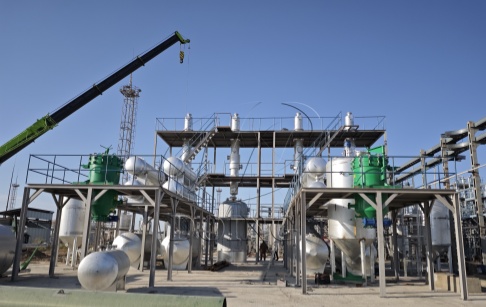
Installation of DOING 30 tons of waste oil distillation machine project installed in Kazakhstan
-
-
-
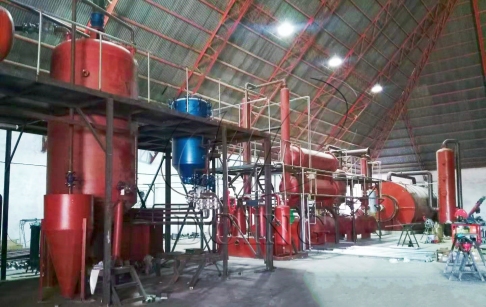
Mexican customer's waste pyrolysis distillation plant were successfully installed
-
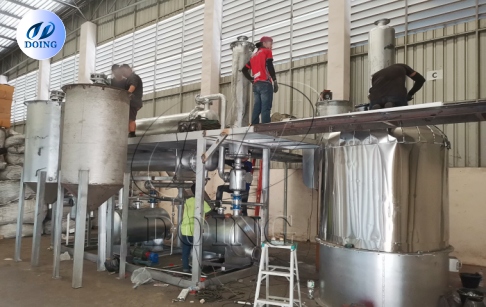
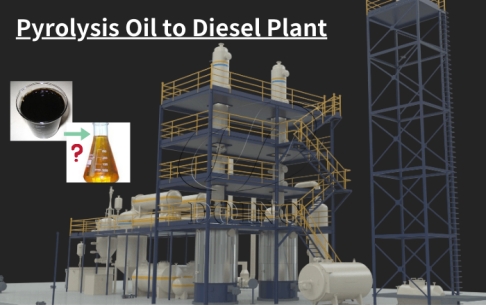
1TPD pyrolysis oil to diesel distillation plant installed in Thailand